

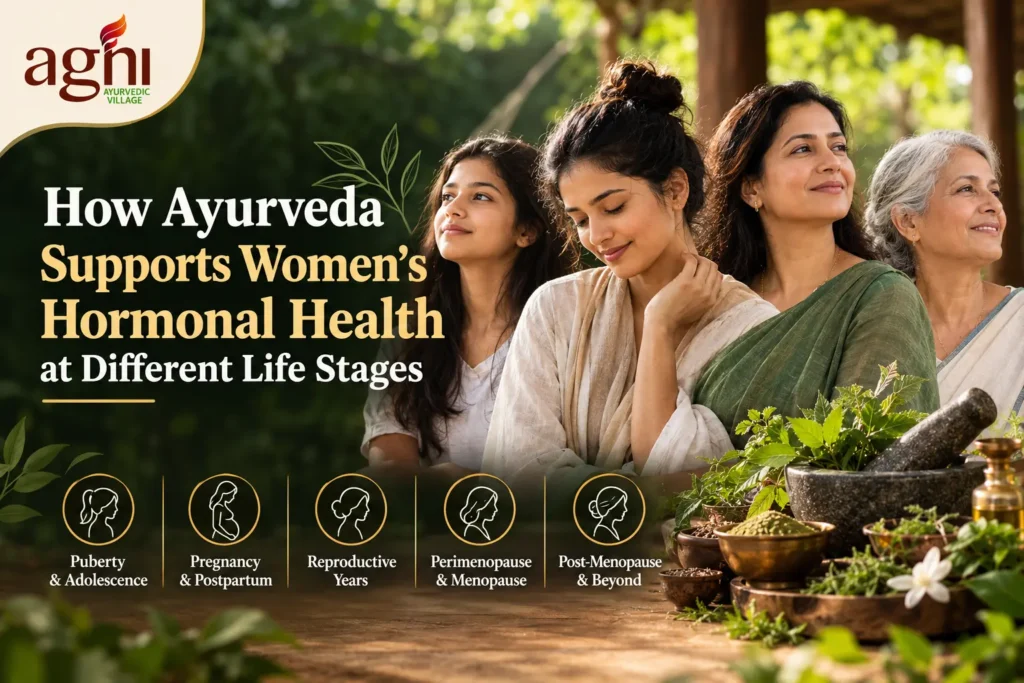
A woman’s body does not remain the same throughout her life—and it was never meant to.
The needs of a woman in her twenties can be very different from those during pregnancy, the postpartum period, perimenopause or menopause. Hormonal changes are a natural part of these transitions, but lifestyle, nutrition, sleep, stress and overall health can influence how comfortably a woman moves through them.
Ayurveda has traditionally viewed women’s health through this changing life-stage perspective. Rather than offering one solution for every woman, Ayurveda treatment for women focuses on understanding the individual and supporting her health according to her current needs.
Ayurveda and women’s health: a personalised approach
Ayurveda considers digestion, daily routine, sleep, mental wellbeing, reproductive health and overall strength as interconnected.
This is particularly relevant to women because hormonal health cannot always be separated from the rest of the body.
A woman experiencing irregular periods, fatigue, digestive disturbances, sleep problems or significant changes in mood may need a broader assessment rather than simply being given a supplement or herbal preparation.
1. Reproductive years: building healthy foundations
During the reproductive years, healthy nutrition, adequate sleep, regular movement and stress management form the foundation of wellbeing.
Ayurveda encourages dinacharya, or a consistent daily routine, along with nourishing, appropriately prepared food and regular physical activity.
For women experiencing concerns such as painful periods, irregular cycles or symptoms associated with PCOS, Ayurvedic care may be used as a complementary approach alongside appropriate medical evaluation.
Simple habits matter:
– Maintain regular meals and adequate hydration.
– Include sufficient protein and nutrient-dense foods.
– Prioritise consistent sleep.
– Stay physically active.
– Avoid constantly pushing through exhaustion.
– Track menstrual patterns and notice changes rather than ignoring them.
2. Pregnancy: nourishment rather than restriction
Pregnancy is a unique physiological phase and requires careful, individualised care.
Ayurveda has a rich tradition of garbha paricharya, which includes attention to maternal nutrition, routine, emotional wellbeing and preparation for childbirth.
However, pregnancy is also a time when self-prescribing Ayurvedic medicines or herbal preparations should be avoided. Any Ayurvedic treatment, medication or therapy during pregnancy should be recommended by a qualified practitioner in coordination with the woman’s obstetric care.
3. Postpartum: recovery deserves attention
After childbirth, women are often expected to immediately return to their previous routine.
But the postpartum period is a major physical and emotional transition.
Ayurveda traditionally places emphasis on postpartum recovery, including appropriate nourishment, rest, gentle movement and supportive care. The exact approach should depend on the woman’s delivery, recovery, lactation status and overall health.
The focus should not be on quickly “getting the body back.” It should be on helping the mother recover.
4. Perimenopause and menopause: supporting the transition
As ovarian hormone production changes, women may experience changes in menstrual cycles, sleep, mood, body composition, hot flashes and energy.
Ayurveda approaches this stage through dinacharya, ahara (diet), appropriate activity, stress management and individualised therapies.
This can be a good time to reassess lifestyle rather than treating every symptom in isolation.
Regular strength-building activity, adequate protein, good sleep, sunlight exposure and maintaining social and emotional connection can all support healthy ageing.
When should a woman seek professional help?
Ayurveda can support overall wellbeing, but persistent or significant symptoms should not simply be attributed to “hormonal imbalance.”
Very heavy bleeding, prolonged absence of periods, unexplained weight changes, severe pelvic pain, persistent fatigue or significant mood changes deserve appropriate medical evaluation.
An integrated approach can allow Ayurveda and modern medical care to complement each other safely.
Ayurveda for women at every stage
Women’s health is not one chapter—it is a lifelong journey of changing needs.
The most useful Ayurveda treatment for women is therefore not a generic package or a one-size-fits-all prescription. It begins by understanding the woman in front of you: her age, stage of life, constitution, symptoms, routine, nutrition, stress and overall health.
At Agni Ayurvedic Village, our approach to women’s wellness focuses on personalised Ayurvedic guidance, practical lifestyle changes and therapies selected according to individual needs.
Because supporting hormonal health is not about trying to control every natural change.
It is about helping a woman understand her body, care for it through every transition, and build lasting health.