

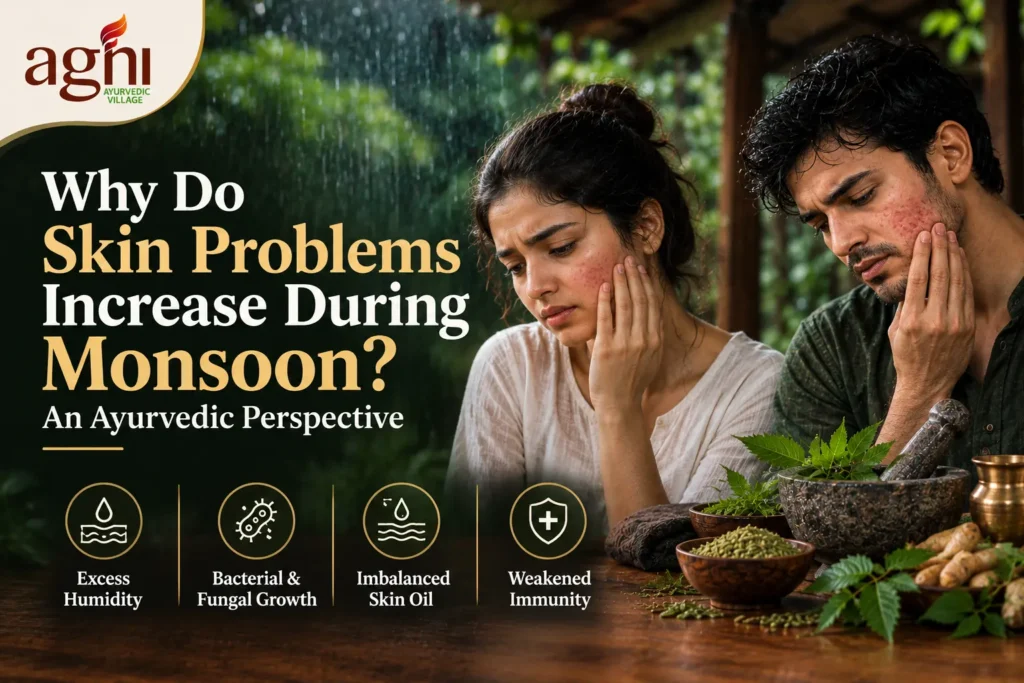
The monsoon is a welcome change after months of heat, but our skin doesn’t always welcome the rainy season with the same enthusiasm. For many people, this is the time when itching, rashes, fungal infections, excessive sweating and recurring skin complaints start appearing or become worse.
Humidity, sweating, damp clothes and prolonged moisture on the skin can certainly contribute to these problems. But Ayurveda looks a little deeper. It considers skin health to be connected not only to what happens on the surface, but also to Agni (digestion), Dosha balance, diet, lifestyle and seasonal changes.
Why Does Monsoon Affect the Skin?
During monsoon, the increased humidity can leave the skin damp for long periods. Wet footwear, sweaty skin folds and clothes that don’t dry properly can create an environment where fungal and bacterial infections thrive.
Ayurveda also explains that Agni tends to become weaker during monsoon. When digestion is compromised, the body may not process food efficiently, and Ayurveda associates this with the formation of Ama. Changes in Dosha balance during the season may further influence an individual’s susceptibility to different health problems, including skin disorders.
This is why Ayurvedic skin care is not simply about applying something to the affected area. The aim is to understand why the problem is occurring in the first place.
Can Panchakarma Help During Monsoon?
If you are someone whose skin problems return almost every monsoon, Ayurveda may consider seasonal Panchakarma after assessing your constitution, strength, digestion and existing condition.
Two important procedures that may be considered in selected individuals are Snehapana and Virechana.
Snehapana – Preparing the Body
Snehapana involves the internal administration of suitable medicated ghee or other Sneha under the supervision of an Ayurvedic physician. It is traditionally used as a preparatory step before Shodhana.
The purpose is not simply to “detox” the body. In classical Ayurveda, Snehapana is part of a carefully planned therapeutic process intended to prepare the body for the subsequent purification procedure.
Virechana – Therapeutic Purgation
When indicated, Virechana follows the appropriate preparatory procedures. It is a controlled therapeutic purgation used particularly when Pitta and Rakta are involved in the disease process.
Classical Ayurveda gives Virechana an important place in the management of selected Kushta (skin disorders). However, it is not something everyone should undergo every monsoon. The patient’s age, strength, digestion, constitution, disease and suitability for Shodhana must first be assessed by a qualified Ayurvedic physician.
What About Takradhara?
Takradhara is another traditional Ayurvedic therapy in which a continuous stream of medicated buttermilk is gently poured over the forehead.
It is particularly interesting when skin concerns coexist with stress, poor sleep, mental exhaustion or features associated with Pitta aggravation. Its cooling and soothing nature makes it a valuable therapy in selected Ayurvedic wellness protocols.
However, Takradhara is not a treatment for every skin disease. Ayurveda works best when the therapy is selected according to the individual rather than following a one-treatment-fits-all approach.
Don’t Forget Your Daily Routine
Panchakarma is only one part of Ayurvedic skin care. During monsoon, simple habits matter too:
– Eat freshly prepared, warm and easily digestible food.
– Avoid overeating and foods that disturb your digestion.
– Keep your skin clean and thoroughly dry.
– Change out of wet clothes as soon as possible.
– Keep feet and skin folds dry.
– Maintain regular sleep and meal timings.
– Follow a seasonal routine (Ritucharya) suited to your constitution.
Ayurveda Looks Beyond the Skin
If your skin problems return every monsoon, don’t simply wait for the next flare-up and treat the symptoms again. An Ayurvedic physician can assess your Prakriti, Dosha involvement, Agni and overall health and decide whether dietary changes, medicines, external therapies or Panchakarma are appropriate.
Authentic Ayurvedic skin treatment is not about promising that one procedure will prevent every skin disease. It is about understanding your body and giving it the right care at the right time.
And sometimes, the best time to care for your skin is before the next monsoon arrives.